
Federated Learning and Edge AI for Intelligent and Secure Connected Vehicle Networks
[2023 – 2025]
Building a federated learning-based architecture for efficient and secure communication and intelligence in connected autonomous vehicles.
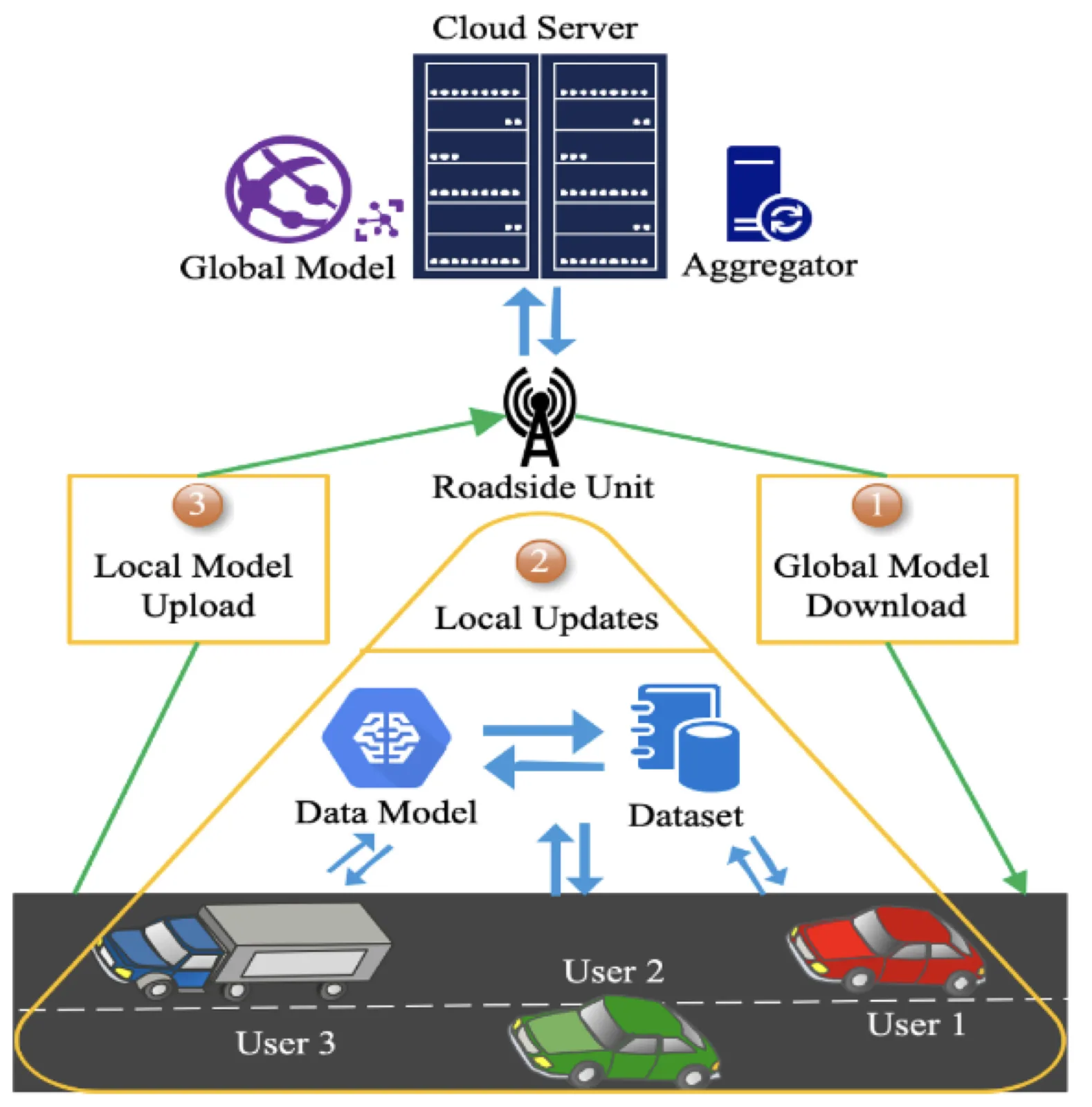
As connected autonomous vehicles (CAVs) become more prevalent, the need for adaptive, secure, and efficient learning systems grows. Traditional centralized AI training approaches face limitations in coping with diverse environments and privacy concerns. To address this, our research explores the use of Federated Learning (FL), in combination with Multi-access Edge Computing (MEC), as a decentralized AI platform for autonomous vehicles and vehicular networks.
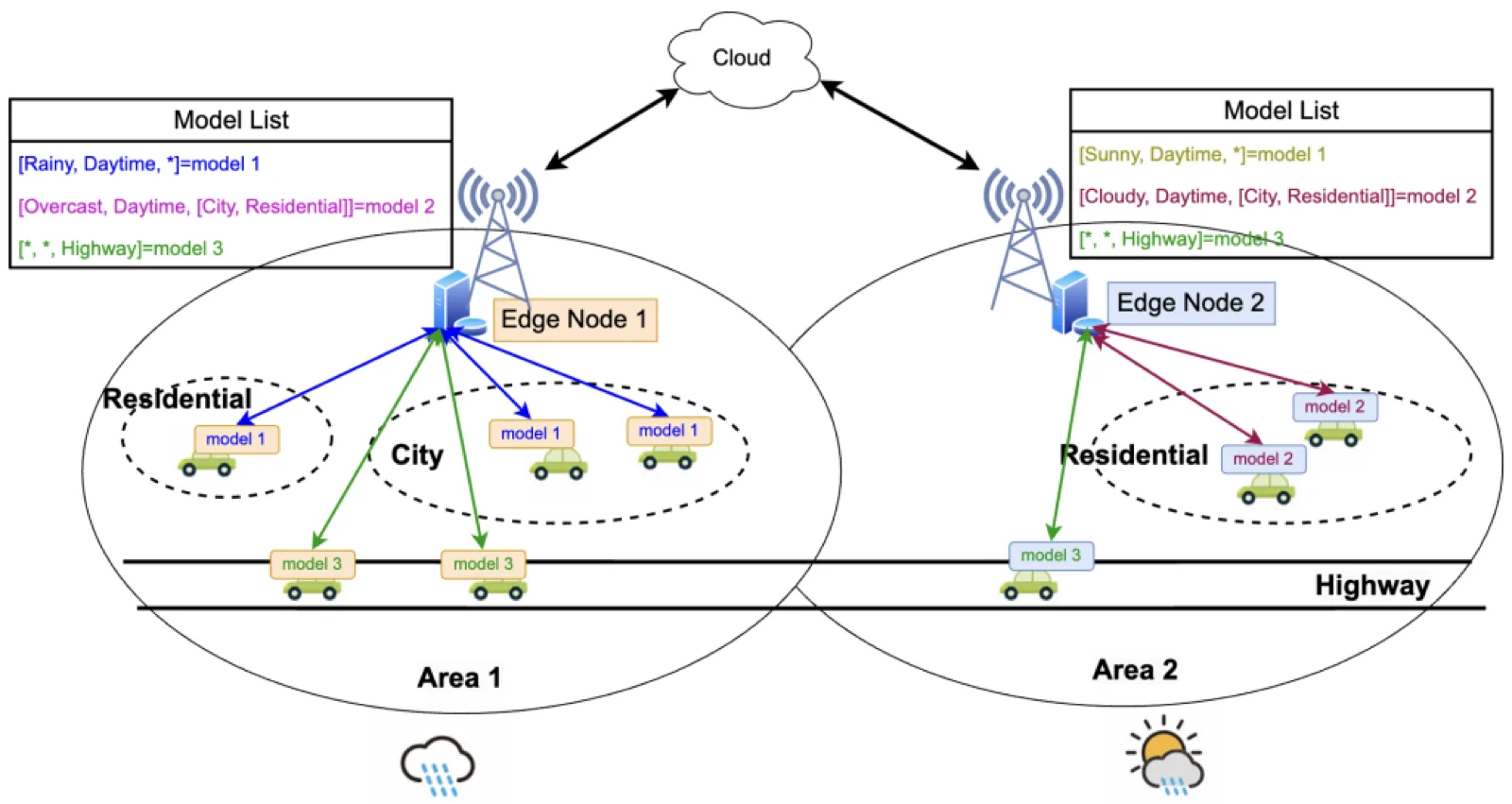
One of our key studies proposes an MEC-assisted FL framework where edge nodes act as aggregators and cache environment-specific models. These dedicated models are updated and distributed to individual vehicles, resulting in improved performance over general-purpose models. Simulation results show that the proposed system consistently outperforms baseline approaches, especially under varying road and weather conditions. Furthermore, novel scheduling algorithms enable effective utilization of edge computing resources while reducing communication costs.
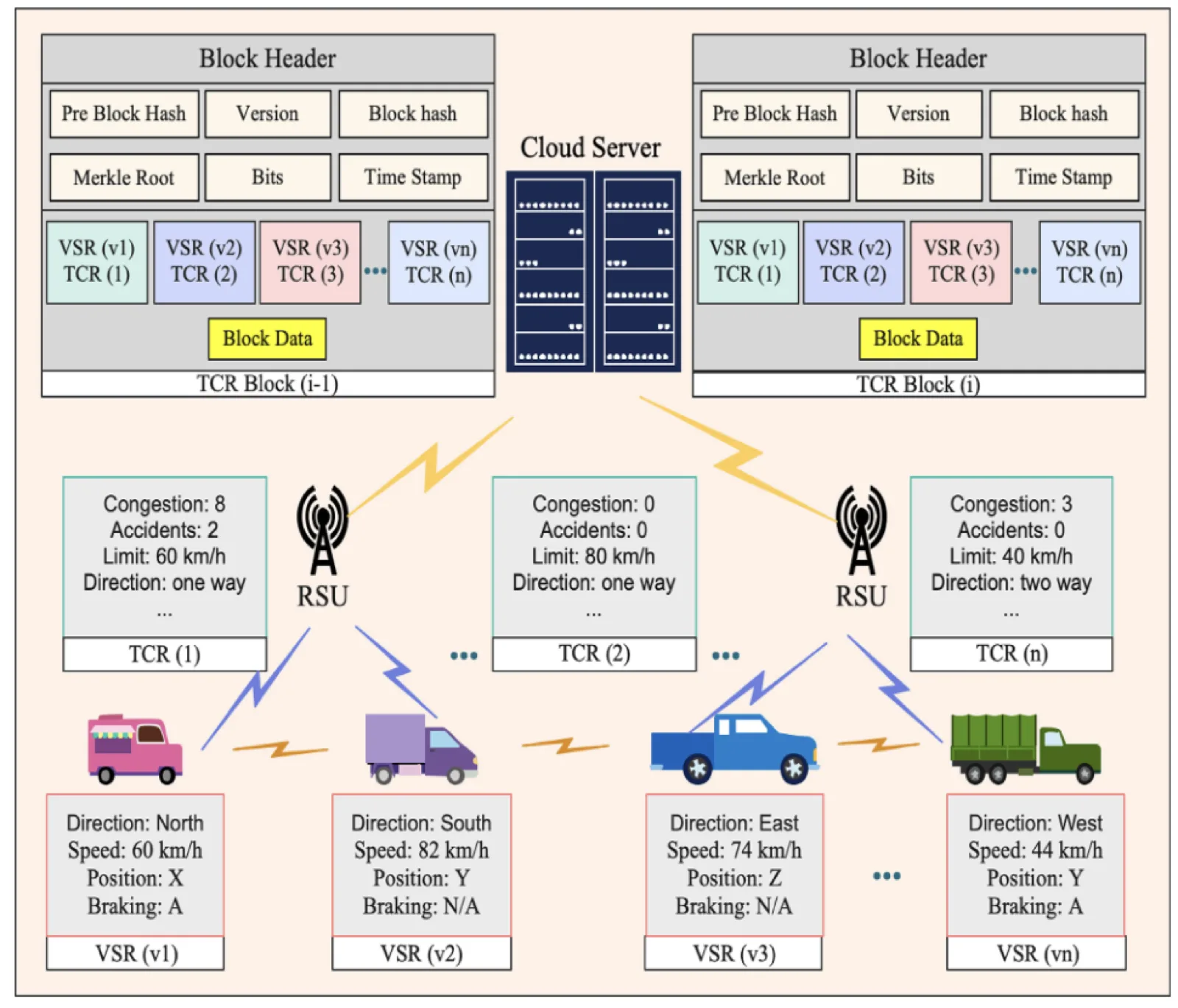
To enhance trust and security, we introduced a Blockchain-integrated Federated Learning framework called SEBFL. This system leverages homomorphic encryption to maintain privacy during the exchange of learning parameters between vehicles, infrastructure, and cloud servers. Our evaluations demonstrated the system’s resilience to privacy attacks such as model inversion and membership inference, while maintaining high inference accuracy.
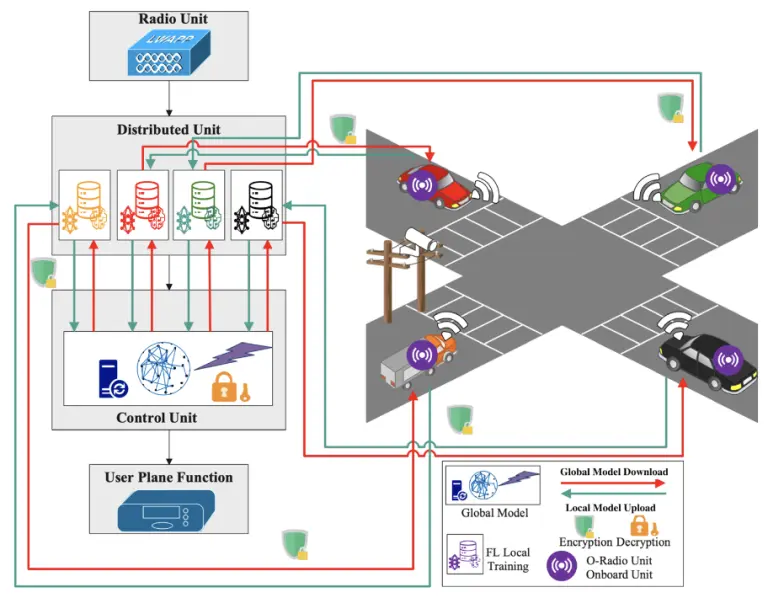
In addition, we investigated the application of FL in Open RAN environments for vehicular communications. This work proposes a unified framework that tackles communication efficiency, adaptive learning, and data privacy in a single system. As part of our ongoing research, we continue to explore distributed AI platforms that empower cooperative and intelligent transport systems, advancing the future of safe and scalable autonomous mobility.
Publication
- Federated Learning for Secure and Efficient Vehicular Communications in Open RAN
Asad, Muhammad, Shaukat, Saima, Nakazato, Jin, Javanmardi, Ehsan, Tsukada, Manabu. Cluster Computing, vol. 28, no. 211, 2025, ISSN: 1386-7857 [Journal Article]BibTeX - Secure and Efficient Blockchain-based Federated Learning Approach For VANETs
Asad, Muhammad, Shaukat, Saima, Javanmardi, Ehsan, Nakazato, Jin, Bao, Naren, Tsukada, Manabu. IEEE Internet of Things Journal, vol. 11, iss. 5, pp. 9047-9055, 2024, ISSN: 2327-4662 [Journal Article]BibTeX - Limitations and Future Aspects of Communication Costs in Federated Learning: A Survey
Asad, Muhammad, Shaukat, Saima, Hu, Dou, Wang, Zekun, Javanmardi, Ehsan, Nakazato, Jin, Tsukada, Manabu. Sensors, vol. 23, no. 17, 2023, ISSN: 1424-8220 [Journal Article]BibTeX - Overcoming Environmental Challenges in CAVs Through MEC-Based Federated Learning
Wang, Zekun, Nakazato, Jin, Asad, Muhammad, Javanmardi, Ehsan, Tsukada, Manabu. 14th International Conference on Ubiquitous and Future Networks (ICUFN2023), pp. 1-6, Paris, France, 2023 [Proceedings Article]BibTeX